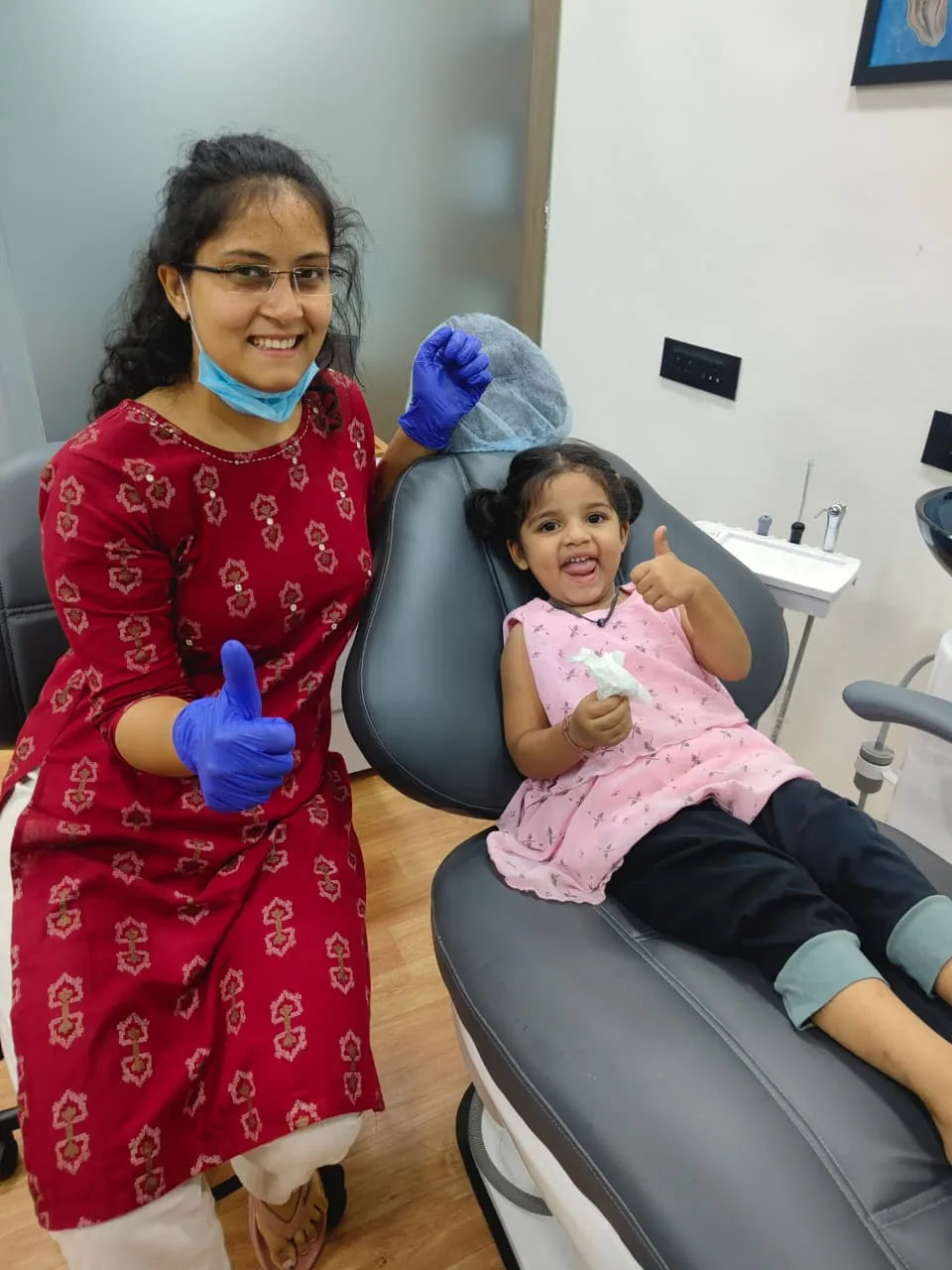
An early dental visit is mainly about prevention, development and helping a child become comfortable with the clinic. The American Academy of Pediatric Dentistry recommends a first visit when the first tooth appears and no later than the first birthday.
What happens at the first visit?
The pace depends on the child's age and comfort. The dentist may talk with the parent first, count the teeth, look at the gums and bite, and check for early decay or developmental concerns. A very young child may sit on a parent's lap. The goal is a useful examination without forcing unnecessary steps.
X-rays are not automatic at every first visit. They are considered when the examination, symptoms, injury history or decay risk indicates a need.
How parents can prepare
- Choose a time when the child is usually rested rather than hungry or sleepy
- Use simple, neutral words such as "the dentist will count and check your teeth"
- Avoid sharing frightening stories or promising that nothing will happen
- Bring details of medicines, allergies, health conditions and previous dental injuries
- Let the clinic know about sensory needs, anxiety or a previous difficult experience
Daily care for new teeth
Begin brushing when the first tooth erupts. AAPD guidance recommends a tiny smear of fluoride toothpaste for children under three and a pea-sized amount from ages three to six, with an adult helping and supervising. The correct method and fluoride advice can be personalised during the visit.
Frequent exposure to sugary drinks and snacks increases decay risk. Water between meals and a consistent brushing routine are more useful than trying to make one appointment compensate for daily habits.
When should a child be seen sooner?
Arrange a prompt assessment for tooth pain, facial or gum swelling, a broken tooth, darkening after an injury, difficulty eating, persistent mouth sores or visible cavities. A knocked-out baby tooth should not be pushed back into the socket. Contact a dentist for injury guidance.
How often are follow-up visits needed?
The interval is based on the child's decay risk, development, home care and any active concern. Some children need closer review than others. At later visits, the dentist can monitor spacing, eruption and whether an orthodontic assessment may be useful.
Disharth Dentistry plans age-appropriate visits for children and explains home care clearly to parents. Book a child's visit on WhatsApp
This guide is for general education and does not replace an individual dental examination for your child.