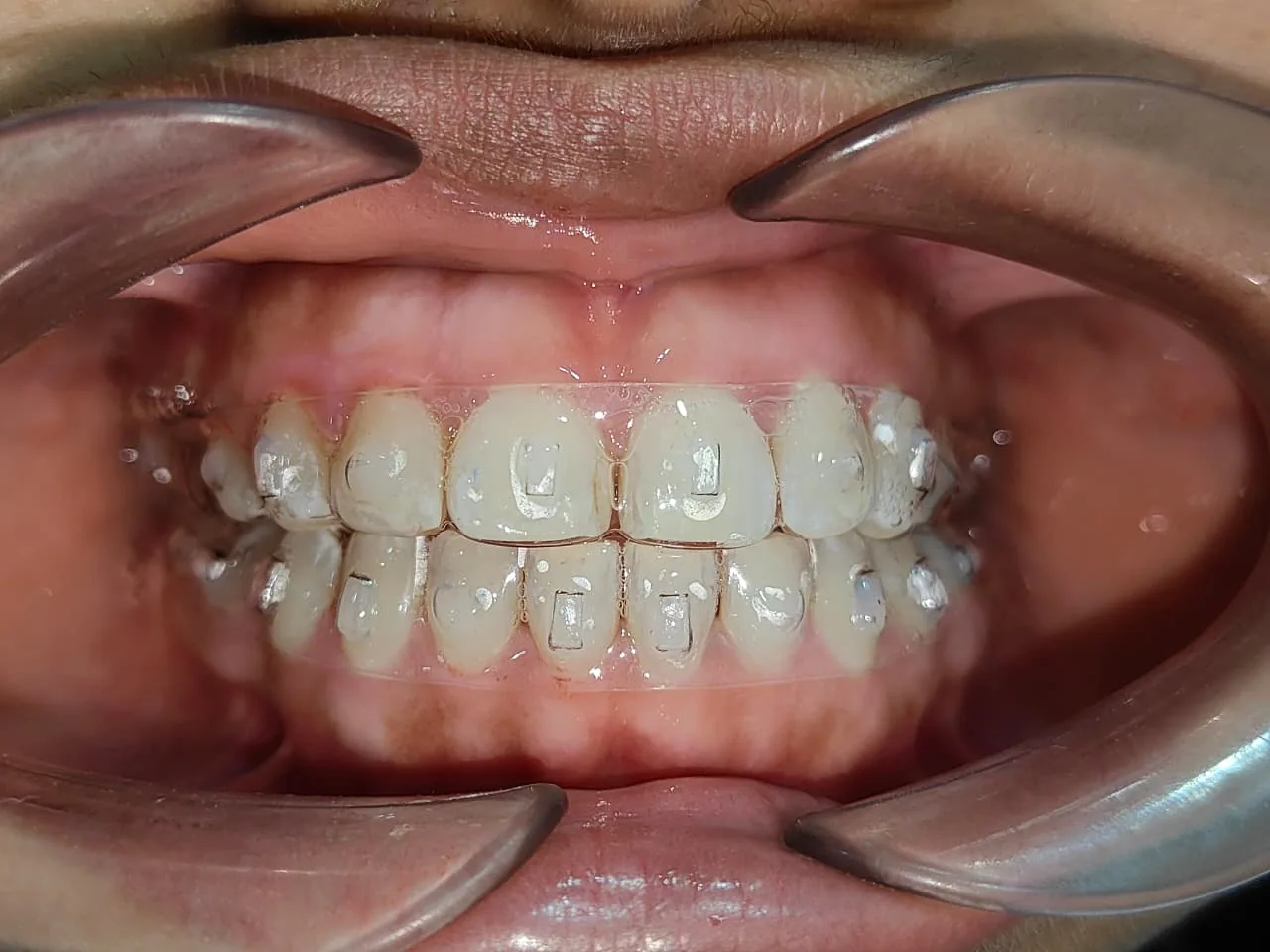
Clear aligners and braces can both move teeth, but they are not interchangeable in every case. The best appliance is the one that can deliver the planned movement safely and that the patient can use consistently.
What are clear aligners?
Aligners are thin, transparent trays made to fit over the teeth. A planned series applies controlled forces as the trays are changed. They are removable for meals and oral hygiene, which many adults and teens find convenient.
Aligner strengths
- Low visibility during daily wear
- Removable for eating, brushing and flossing
- Digital planning can help visualise the intended sequence
Aligner responsibilities
- They only work when worn for the prescribed time
- Trays can be lost, damaged or left out
- Teeth must be cleaned before trays are replaced
- Not every complex bite or movement is best managed with aligners alone
How braces differ
Braces use brackets attached to the teeth and a wire that guides movement. Because they stay in place, they do not depend on remembering to insert trays. They can manage a broad range of orthodontic problems and allow the orthodontist to adjust forces directly.
Braces are more visible and require careful cleaning around brackets and wires. Certain hard or sticky foods may need to be avoided to protect the appliance.
Which option is faster?
Treatment time depends more on the diagnosed problem, biology, plan and cooperation than on marketing claims. A simple case may progress efficiently with aligners, while another may require the control of braces or a combined approach.
Questions to discuss
- How complex is the bite—not just the front-tooth alignment?
- Will I wear removable trays consistently?
- Do I need extractions, attachments, elastics or other auxiliaries?
- How will I keep the teeth and appliance clean?
- What retainer plan is needed after active treatment?
Why retainers matter
Teeth can move after braces or aligners. Retainers help maintain the corrected position while tissues adapt. The design and wear schedule should follow the orthodontist’s recommendation.
Disharth Dentistry provides orthodontic assessment for adults and teens. Request an appointment
This guide is educational and cannot determine appliance suitability without an orthodontic assessment.