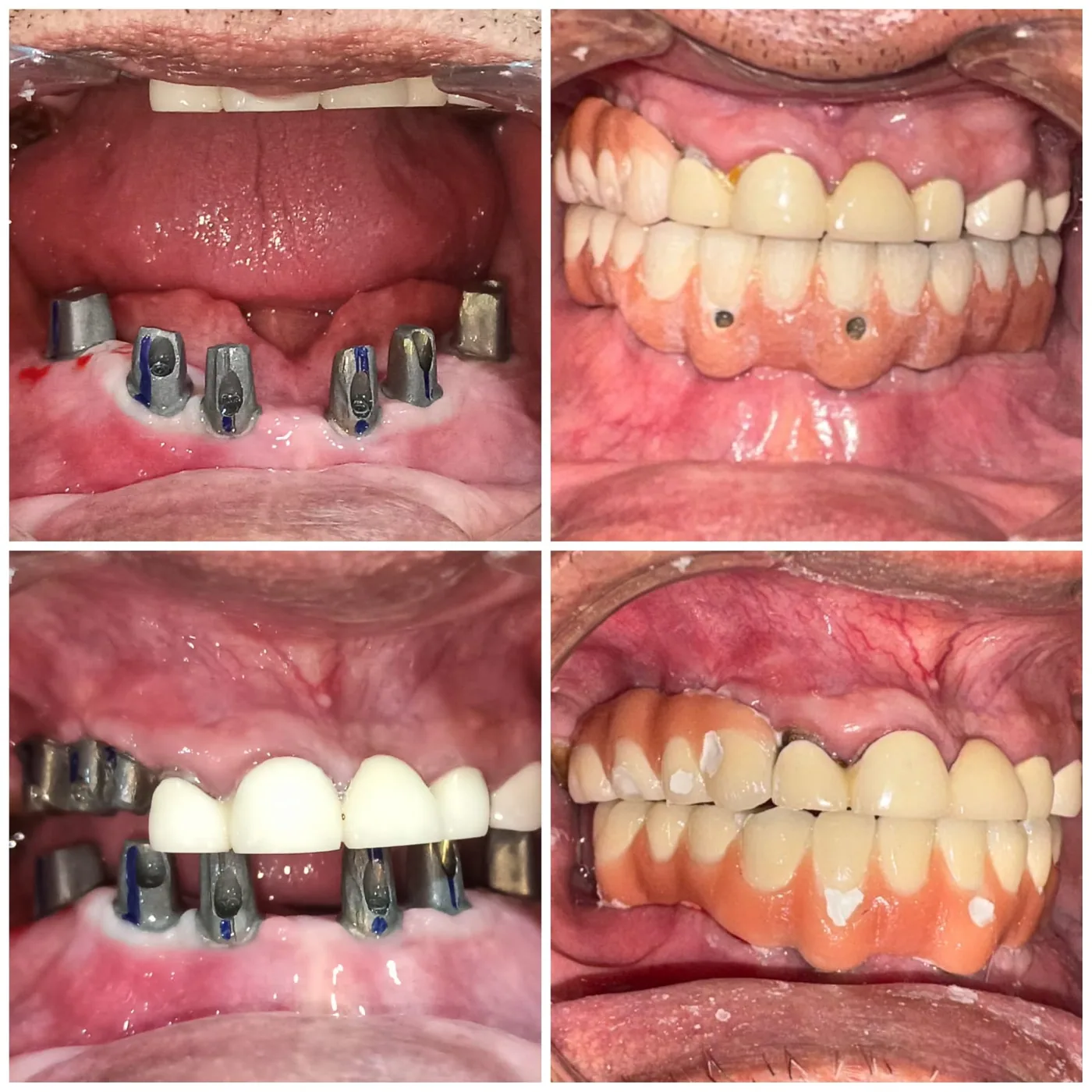
A missing tooth can affect chewing, speech, confidence and the way nearby teeth share force. Two common fixed replacement options are a dental implant and a dental bridge. They can both restore a gap, but they use very different types of support.
How a dental implant works
A dental implant is a body-compatible post placed in the jawbone. After healing and integration with the bone, it can support a crown for one missing tooth or help support a bridge or denture when several teeth are missing.
Implant treatment often involves examination, imaging, surgical placement, healing and final restoration. Some patients may require additional procedures or a longer healing phase; others may qualify for a different sequence.
How a dental bridge works
A fixed bridge spans the missing-tooth space. In a common design, the teeth next to the gap are prepared for crowns and an artificial tooth is joined between them. Other bridge designs exist, and the support should be selected for the location and bite.
A bridge may be worth discussing when neighbouring teeth already need crowns, implant surgery is not suitable, or treatment timing and anatomy favour a tooth-supported option.
Questions that change the decision
- Are the teeth beside the gap healthy, heavily filled or already crowned?
- Is there enough healthy bone and gum support for an implant?
- Are there medical conditions, medications or tobacco use that could affect healing?
- How much bite force reaches the area?
- Can the restoration be cleaned comfortably every day?
- Is one tooth missing, or are multiple teeth involved?
Cleaning and maintenance
Both options require excellent daily hygiene and dental reviews. An implant crown is cleaned around the gum line and between teeth. A bridge also needs cleaning under the artificial tooth using suitable flossing or interdental aids. Natural teeth and implants can both develop problems if plaque is not controlled.
Which one lasts longer?
No responsible plan can promise a fixed lifespan. Longevity depends on diagnosis, materials, bite, hygiene, gum health, smoking, medical factors and maintenance. The right comparison is not simply “implant versus bridge”; it is which design is most predictable for your mouth.
What to expect at a consultation
The dentist examines the gap, surrounding teeth, gums and bite. X-rays or 3D imaging may be advised. You should understand the available options, sequence, expected healing, maintenance and cost before proceeding.
Disharth Dentistry can compare implant, bridge and removable options after a clinical examination. Book on WhatsApp
This article is for general education. It does not diagnose a condition or replace a dentist’s examination.