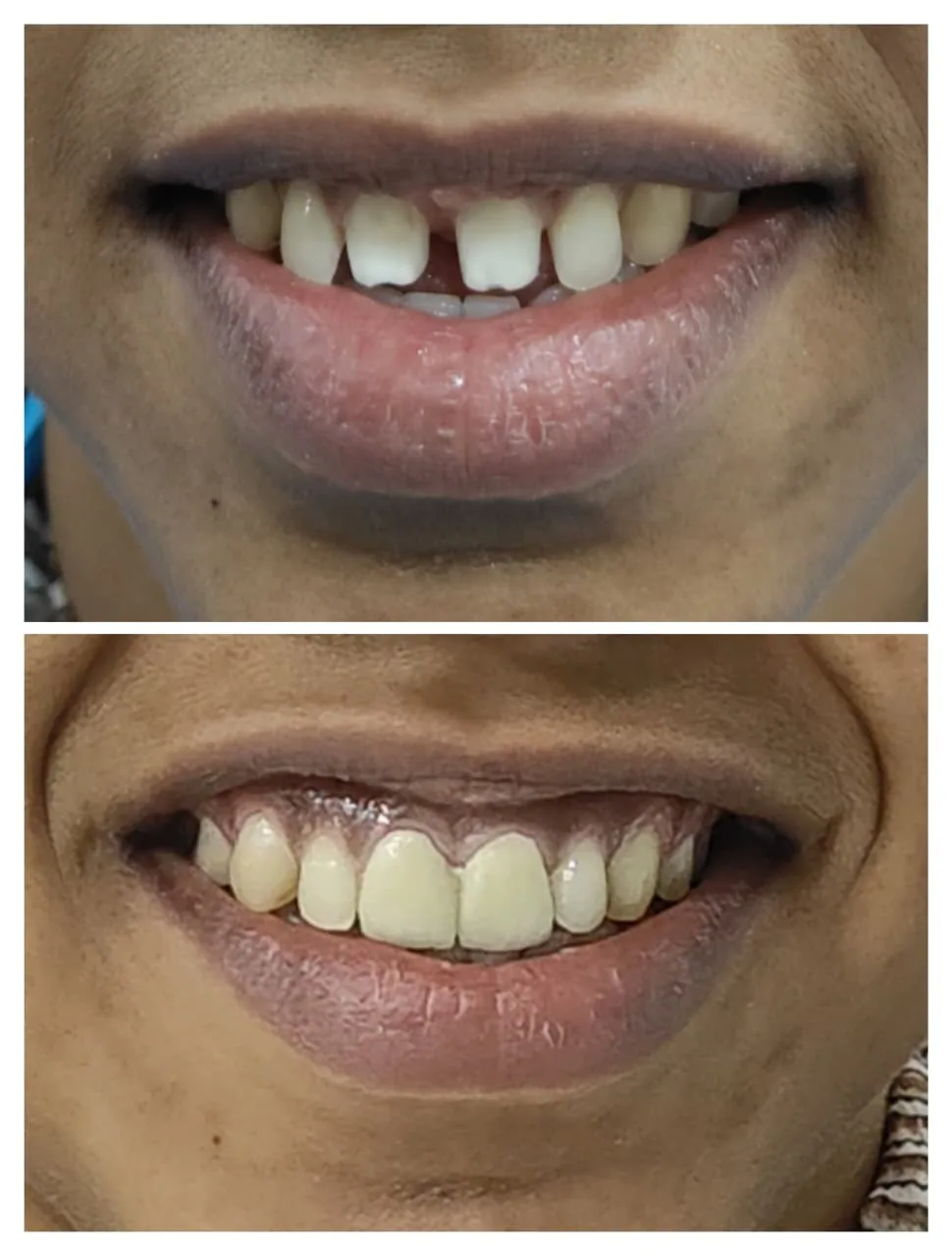
Veneers and crowns can both change the visible shape and colour of a tooth, but they are not interchangeable cosmetic covers. A veneer mainly covers the front surface. A crown surrounds much more of the tooth and is often chosen when strength and protection are major concerns.
What is a dental veneer?
A veneer is a thin layer of porcelain or tooth-coloured composite bonded to the front of a tooth. It may be considered for selected concerns such as discolouration, shape, spacing, minor wear or an uneven smile line.
Porcelain veneers usually require removal of some enamel and the process is generally not reversible. Composite veneers can sometimes use a more conservative approach, but suitability and durability still depend on the tooth and bite.
What is a dental crown?
A crown is a restoration that covers the prepared tooth to restore its shape, function and strength. It may be discussed for a tooth with a large filling, fracture, major wear, significant decay or reduced structure after root canal treatment. A crown can also form part of a bridge or restore a dental implant.
The practical differences
| Question | Veneer | Crown |
|---|---|---|
| Coverage | Mainly the front surface | Covers most or all visible tooth surfaces |
| Common goal | Selected shape, colour or spacing changes | Protection plus restoration of shape and function |
| Tooth condition | Usually needs enough healthy enamel for bonding | Often considered when more tooth structure is compromised |
| Bite factors | Grinding or a deep bite may reduce suitability | Material and design still need bite assessment |
What needs treatment before either option?
Active decay and gum disease need attention first. The dentist also checks old fillings, cracks, tooth position, enamel available for bonding, gum levels and how the upper and lower teeth meet. Photos, X-rays or a trial smile design may be used depending on the case.
Will the result look natural?
A natural result is not simply the brightest shade. Proportion, translucency, surface texture, gum symmetry and the neighbouring teeth all matter. The plan should fit the face and smile rather than make every tooth identical.
How do you care for veneers and crowns?
Both require daily brushing, cleaning between the teeth and regular clinical review. They can still develop problems at the edge where the restoration meets the tooth. Avoid using restored teeth to open packets or bite hard objects. If you grind your teeth, the dentist may discuss bite management or a protective appliance.
Disharth Dentistry can assess whether conservative reshaping, bonding, veneers, crowns or orthodontic treatment best matches the concern. Request a smile consultation
This guide provides general information. Only a clinical examination can determine how much tooth preparation and which restoration, if any, is appropriate.