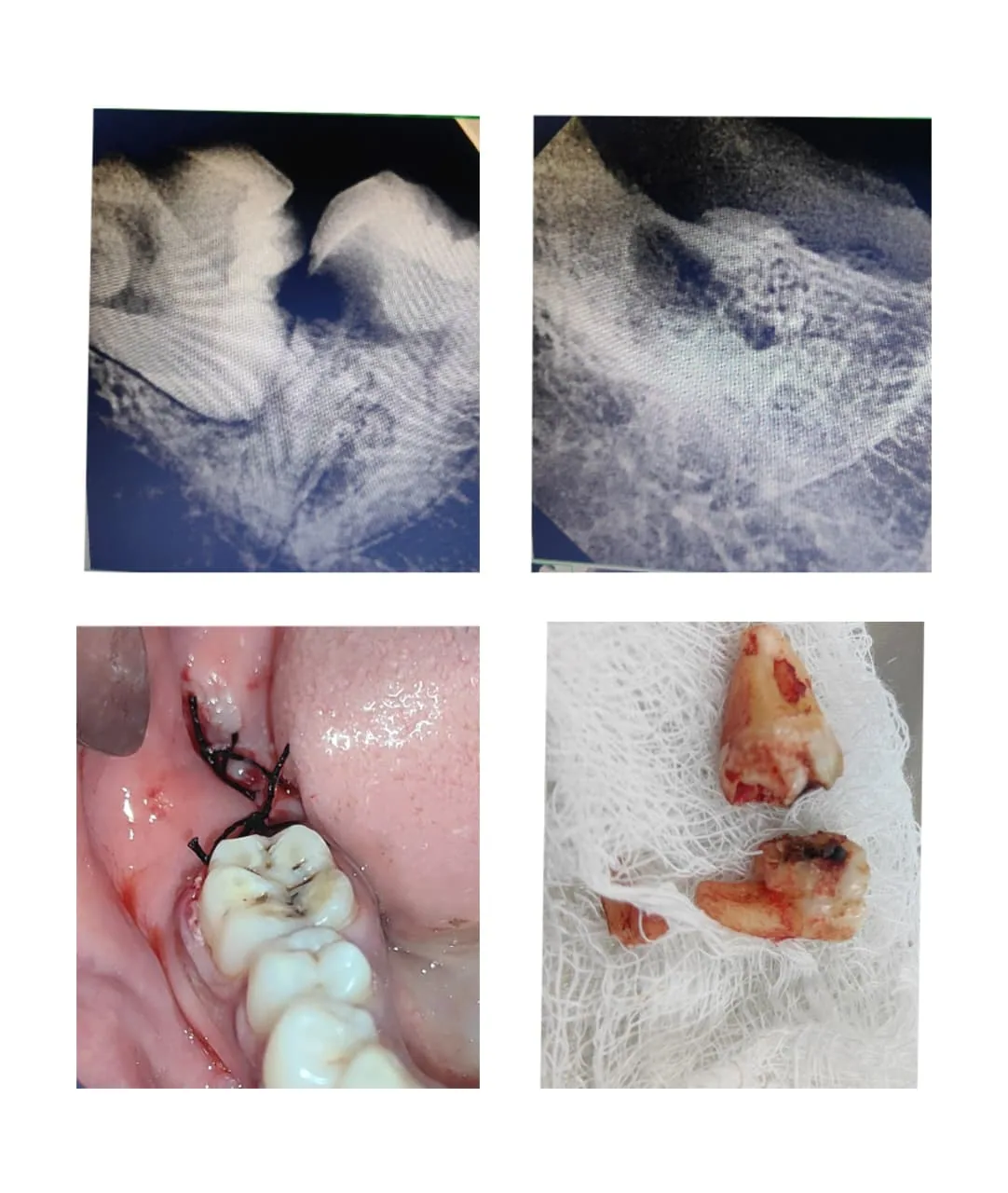
A wisdom tooth is the last molar at the back of the mouth. Some grow into a healthy position and only need routine monitoring. Others remain partly or fully trapped under the gum or jawbone. This is called an impacted wisdom tooth.
Signs that need a dental assessment
Pain at the back of the jaw is one reason to book an examination, but it is not the only one. A wisdom tooth can create a difficult-to-clean area even before severe pain starts.
- Repeated pain or tenderness behind the last molar
- Swollen, red or bleeding gum around a partly erupted tooth
- Food repeatedly getting trapped at the back of the mouth
- Bad taste, bad breath or discharge near the tooth
- Difficulty opening the mouth comfortably
- Decay or damage affecting the wisdom tooth or the molar beside it
Why an X-ray matters
A clinical examination shows the gum and visible part of the tooth. An X-ray helps the dentist see the angle of the wisdom tooth, its roots, nearby bone and its relationship to important structures. This information helps distinguish a tooth that can be monitored from one that may need removal.
Simple extraction or surgical removal?
A fully erupted tooth may be removed like another tooth. An impacted tooth can require a surgical approach to reach it through the gum and, when necessary, remove a small amount of surrounding bone or divide the tooth into sections. The dentist explains the expected procedure after reviewing the X-ray.
The area is numbed before treatment. The duration and recovery depend on the tooth position, root shape, infection and complexity rather than one standard timeline.
What helps during early recovery?
Follow the written instructions from the treating dentist because they are specific to the procedure. General early precautions commonly include protecting the blood clot, choosing the advised foods, keeping the area clean as directed and avoiding smoking. Vigorous rinsing and drinking through a straw are generally avoided during the first 24 hours.
Some swelling, tenderness and minor bleeding can occur after an extraction. Contact the clinic if bleeding does not settle, pain becomes worse instead of improving, swelling increases markedly, or you develop fever, a bad taste or difficulty opening the mouth.
When is swelling an emergency?
Seek urgent medical or dental help if swelling spreads toward the eye or neck, or if breathing, swallowing or speaking becomes difficult. These symptoms should not wait for a routine appointment.
Bring any previous X-rays if available. Disharth Dentistry can assess the tooth and explain monitoring, cleaning or removal options. Request an assessment on WhatsApp
This guide is general education and cannot diagnose an impacted tooth. Treatment recommendations require an examination and, where indicated, an X-ray.